Where is Kuzco?
〰️
Where is Kuzco? 〰️
Currently in:
Madrid, Spain
-
Madrid has had a number of ceremonial gateway arches for centuries. Puerta de Alcalá, Puerta de Toledo, Puerta de San Vicente and Puerta de Hierro were erected on roads that led to the city. Their predecessors, Santa María, Cerrada, La Vega, Guadalajara, Segovia, Atocha and Santo Domingo, were the gates of the old city walls.
-
Patatas Bravas - potatos covered in a spicy sauce
Huevos Rotos - french fries, fried egg, and some times jamon
Churros with dipping chocolate
-
There’s an Egyptian temple 5 minutes from where we are staying - The Temple of Debod
This Egyptian temple, which dates back to the 2nd century BC, was transported from Egypt to Madrid’s Cuartel de la Montaña Park, right next to Plaza de España. In the 1960s, Egypt requested international help to save the temple from being damaged by floods following the construction of the Aswan Dam. To thank Spain for the country's generous donation, the Egyptian government gifted the temple to the city of Madrid.
Works on the temple began at the beginning of the 2nd century BC at the orders of King Adijalamani of Meroë, who wanted to build a chapel honouring the god Amun and the goddess Isis. The sanctuary was decorated in high relief. Subsequent kings of the Ptolemaic dynasty built new rooms around the original structure, thereby enlarging the temple. After Egypt was annexed by the Roman Empire, the emperors Augustus and Tiberius, and possibly Hadrian, completed the construction and decoration of the temple.
In the 6th century AD, following the Nubia region’s conversion to Christianity, the temple was sealed off and abandoned. Later, in the 20th century, owing to the construction of the Aswan Dam, the Egyptian government gifted the temple to Madrid. It was transported and rebuilt stone by stone at its current location before being opened to the public in 1972. The reconstruction in Madrid preserved the building’s original orientation, from East to West. To help visitors understand the significance of this magnificent site, the history of the temple and the decorative motifs found on its interior, scale models and videos can be consulted as well as additional audiovisual material which is projected on the walls.
The temple and its gardens now occupy the site where Cuartel de la Montaña once stood. The military building was constructed between 1860 and 1863 on what was known as Príncipe Pío Hill, where Napoleon’s French troops shot the rebels of the uprising of 2 May 1808, a scene which was famously depicted in Goya's 1814 painting The Third of May 1808 or "The Executions". A century later, the same location witnessed the military uprising in July 1936 which led to the Spanish Civil War. During the conflict, the barracks were heavily damaged and subsequently demolished.
https://www.esmadrid.com/en/tourist-information/temple-debod
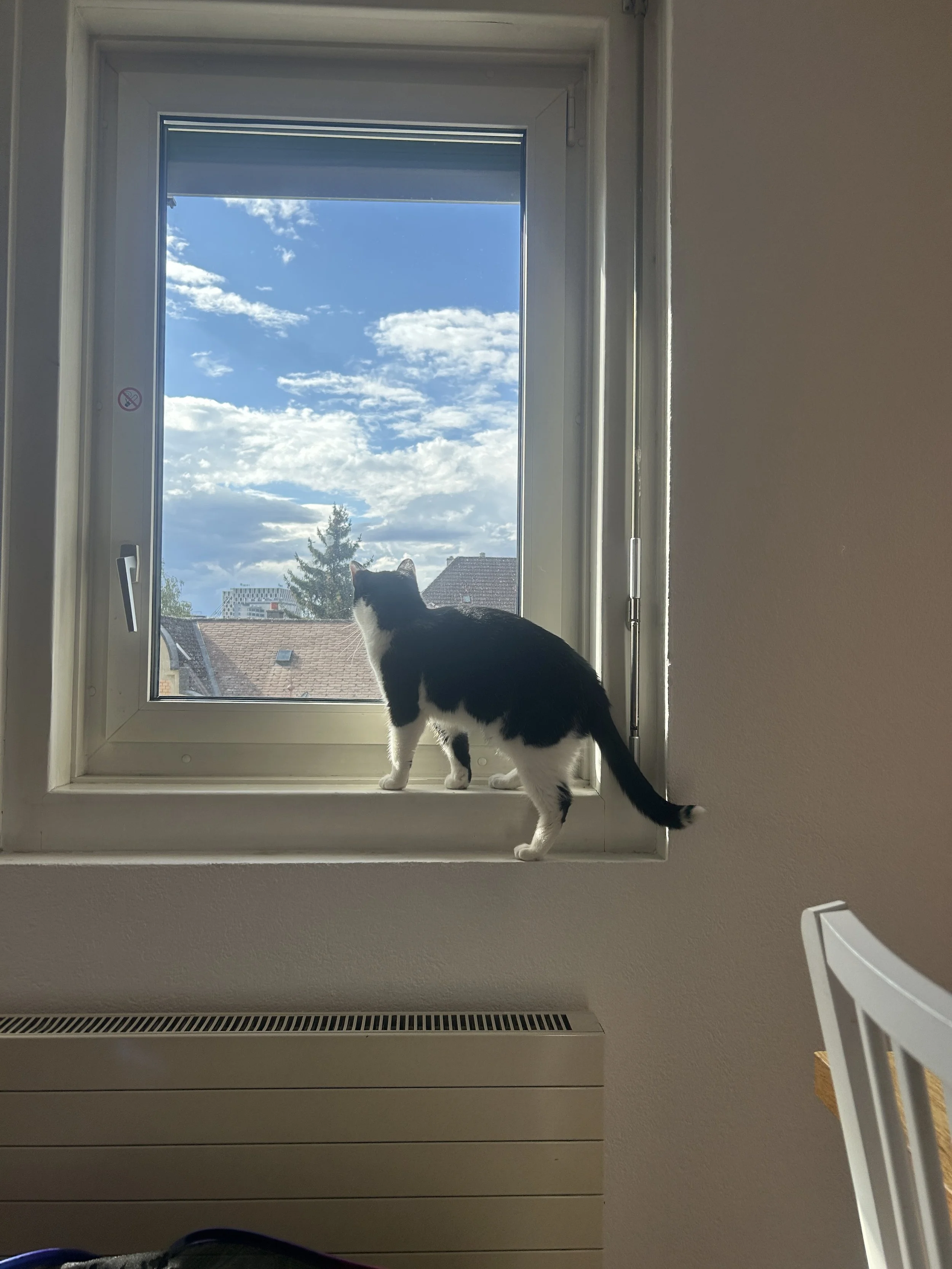
My current favorite spot:
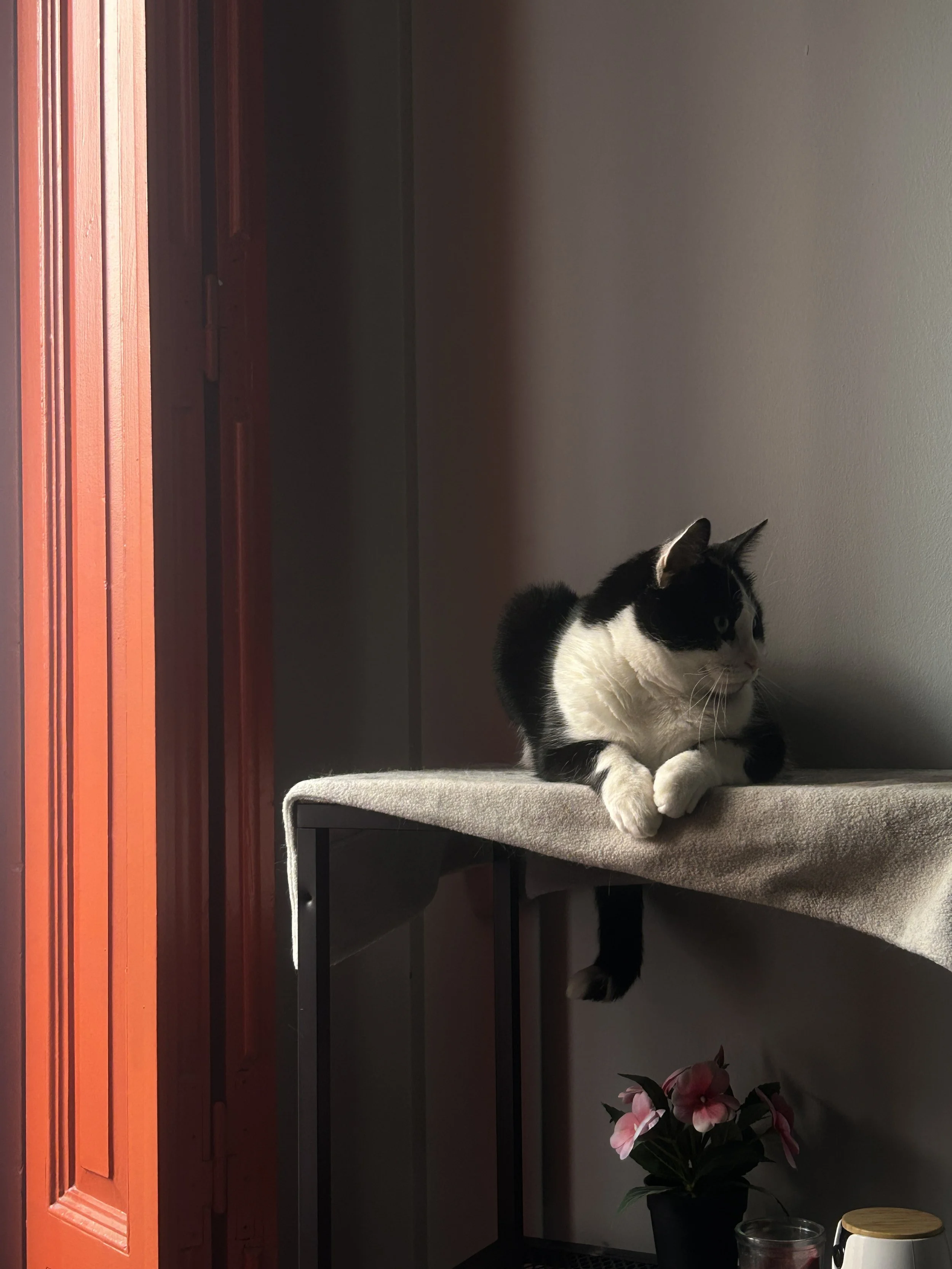
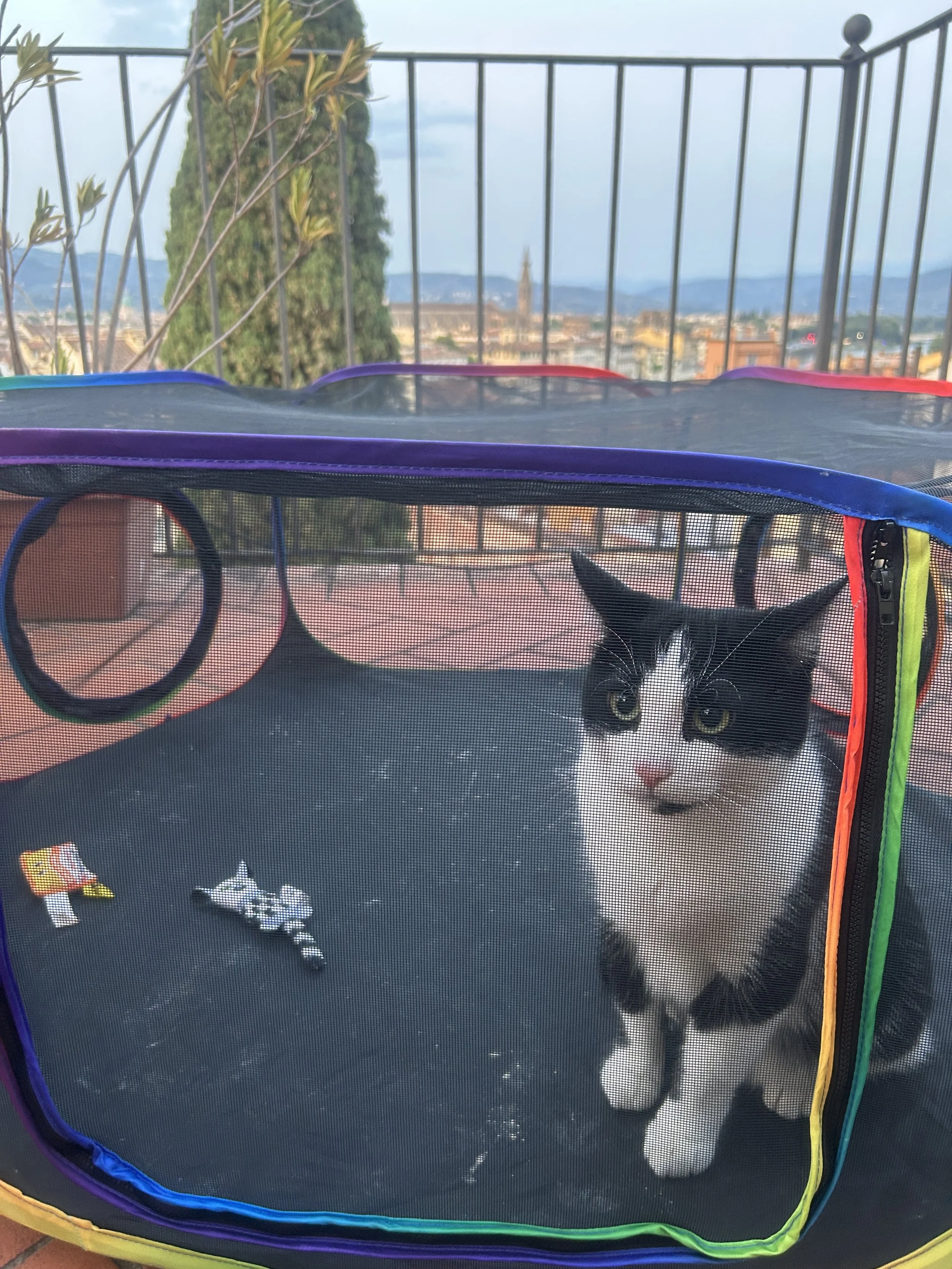
Hi! I’m Kuzco and I am being taken on this trip against my will! I love bird watching and taking naps.